
“Which dating app is the best?”
It’s one of the most common questions on Reddit, Quora, and group chats.
Usually followed by qualifiers like:
- Best for serious dating?
- Best for casual dating?
- Best for long-term relationships?
People compare features, demographics, success stories, and horror stories.
But here’s the uncomfortable truth:
Most dating apps aren’t bad because they target the wrong audience.
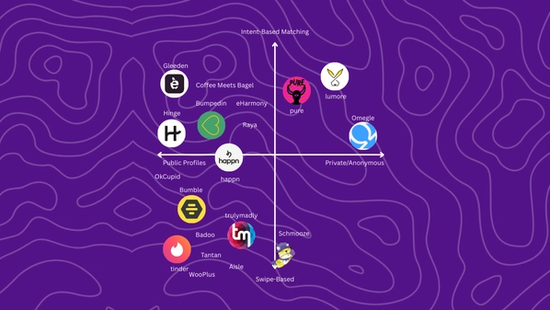
They’re bad because they’re built on the same broken model.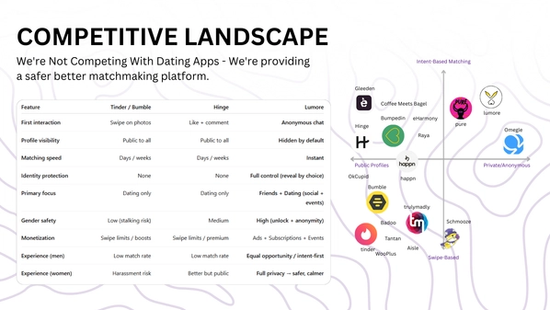
Let’s break it down.
The usual answers (and why they feel unsatisfying)
Casual dating: Tinder
Tinder is usually the default answer for casual dating.
Why?
- Large user base
- Fast swiping
- Low commitment
But that same speed creates:
- shallow interactions
- minimal accountability
- conversations that rarely go anywhere
It works if your goal is attention or short-term novelty.
It struggles if you want consistency or depth—even casually.
“Serious” dating: Hinge
Hinge brands itself as “designed to be deleted.”
Compared to Tinder:
- better prompts
- more context
- slightly slower pace
But the core mechanic is still:
- photo-first judgment
- unlimited options
- parallel conversations
So even people looking for something serious often end up window-shopping humans.
Somewhere in the middle: Bumble
Bumble tried to fix dating with rules—like who messages first.
It helped a bit.
But rules don’t fix incentives.
You still swipe.
You still match without intent clarity.
You still juggle multiple low-investment chats.
The result?
Same fatigue, different UI.
The real issue no one talks about
Reddit debates assume:
“Different relationship goals need different apps.”But most frustration doesn’t come from goals.
It comes from design choices.
Specifically:
- swipe-first interactions
- photo-dominated decisions
- unlimited matching
- no real intent filtering
- zero trust progression
That’s why people bounce between apps without feeling closer to connection.
What actually makes a dating app “the best”?
Across casual, serious, or long-term dating, people consistently want:
- Clarity of intent
- Real conversation, fast
- Fewer but better matches
- Less pressure, more safety
- A reason to invest, not scroll
Most apps optimize for engagement.
Very few optimize for outcomes.
Why Lumore takes a different approach
This is where Lumore stands apart—not by targeting a niche, but by rethinking the starting point.
Instead of asking “How many people can we show you?”
Lumore asks “Who should you actually talk to?”
What Lumore does differently
- No swiping
You don’t judge people in 2 seconds. You start with conversation. - Intent-first matching
Who you want to meet, why you’re here, and what you’re looking for come before anything else. - Anonymous real-time chat
You talk before you reveal. Pressure drops. Honesty goes up. - Progressive profile unlock
Trust is built, not assumed. You reveal more only when it feels right. - Limited active matches
One focused conversation > ten distracted ones.
This works for:
- casual dating without performance pressure
- serious dating without burnout
- long-term dating without endless filtering
Same product. Better alignment.
So… which dating app is the best?
The honest answer:
The best dating app is the one that minimizes noise and maximizes intent.Swipe apps are great at showing people.
They’re bad at helping people connect.
Lumore isn’t trying to replace every dating app overnight.
It’s questioning the assumption that dating must start with judgment and abundance.
Because whether you want something casual or long-term,
connection usually starts the same way:
With a good conversation.
And maybe that’s what “best” should mean in the first place.